Showing posts with label Sicily. Show all posts

Tuesday, May 30, 2023

Genovese Pastries from Sicily

Erice is a hilltop, medieval town in Sicily with narrow cobblestone streets, a Norman castle and a fabulous bakery called Maria Grammatico. The eponymous bakery has plentiful Sicilian treats including these pastries known as "Genovese." While staying in Erice last month, I was perplexed by the name of the pastry, which refers to the town of Genoa, nowhere near Sicily. After returning home, I found a couple of explanations in La Cucina Italiana : "The name of this delicacy – which is not at all Sicilian – probably comes from its shape, which resembles the cap of Genoese sailors who stopped at the ports of Sicily between 1300 and 1500. Another hypothesis, which is decidedly more romantic, claims that the genovesi come from the love between a girl from Erice and a young Ligurian boy: the girl gave the name to the dessert she made for her beloved."

No matter the origin, genovese are delicious, and are filled with a lemony custard, enveloped in a shortbread pastry, or pasta frolla. Maria spent 15 years in a convent after her father died and her mother was left with six children to raise amid the poverty of post-World War II Sicily. It was a difficult life, with little to eat, although the nuns made pastries to raise funds, and Maria absorbed that knowledge and opened her own shop in 1963. Her account of growing up in the convent is one of loneliness and hardship and is recounted in her book, "Bitter Almonds", written with Mary Taylor Simeti. The book includes various recipes, including this one for Genovese.

Be careful not to overcook the custard, or you could end up with scrambled eggs. I ran the custard through a sieve to eliminate any possible lumps.

Roll out the dough, place a heaping spoonful of the filling on top, then moisten the edges with water and place another disc of dough on top, pressing down to seal the edges.

Bake until just barely tan.

They are served warm at Maria's shop, sprinkled with powdered sugar.

They're delicious at room temperature too.

Here are just a few of the other treats for sale at Maria Grammatico's:

martorana (almond paste) fruits:

Cassatine:

and a fig-filled ring (buccelatto or cuccidato):

A trip to Erice is like a trip back in time, with its tiny cobbled streets and alleys:


And the castle of Venus, a 12th century Norman castle:

The 14th century duomo and bell tower:

And the stunning views from Erice out to Trapani and the Mediterranean Sea:

Check out Ciao Chow Linda on Instagram here to find out what’s cooking in my kitchen each day (and more).

Genovese

printable recipe here

Ingredients:

FOR THE DOUGH (PASTA FROLLA):

1 3/4 c. flour

1/2 cup sugar

2 egg yolks

4 Tablespoons ice water

FOR THE CREMA PASTICCIERA:

2 egg yolks

3/4 cup sugar plus 2 Tablespoons

1/4 cup cornstarch

1 1/2 cups milk

grated zest of 1/2 lemon

Directions:

FOR THE PASTRY:

Place the flour, sugar and egg yolks in a food processor and whir until blended.

Add the ice water a tablespoon at a time until the dough comes away from the sides of the bowl.

Do not add too much water or it will be difficult to work the dough.

Turn the dough onto a floured surface and form into a flat disc.

Refrigerate at least 30 minutes before rolling out.

FOR THE FILLING:

Whisk together the egg yolks and sugar in a small heavy saucepan without turning on the heat.

Dissolve tthe cornflour in a quarter of the milk in a glass or mixing cup, then gradually add the rest of the milk and mix well.

Slowly pour the milk mixture into tthe egg mixture, whisking until blended.

Place over low heaat and cook for 10-12 minutes, stirring constantly, until shiny and very thick, the consistency of pudding.

Or cook in a double boiler for 20 to 25 minutes.

Stir in tthe lemon zest.

Pour into a bowl and cover with plastic wrap placed directly on top of the cream.

Cool and refrigerate until ready to use.

TO ASSEMBLE THE GENOVESE:

Cut the dough into four parts.

Work with one part and keep the rest refrigerated.

Roll out thinly and cut out circles, using a 3 inch biscuit or cookie cutter.

Place about a tablespoon or slightly more of the filling in the center of one of the discs.

Wet the perimeter of the disc with water, then top with another disc and press down on the edges.

Bake on parchment paper in a 375 degree oven for 15 -20 minutes until tops are slightly tan in color.

Cool briefly and sprinkle with powdered sugar.

Best eaten warm but delicious at room temperature too.


Wednesday, May 17, 2023

Sicilian Potato Salad and Cooking With The Duchess

On my recent trip to Sicily, I had the good fortune to cook with literary nobility. Let me explain. The above recipe from the cooking session appears at the end, so if you’re here just for the food, skip to the bottom of this post. But then you’d miss learning about a slice of Sicilian history.

One of my all-time favorite books is “The Leopard” by Giuseppe Tomasi di Lampedusa. I first read it in Italian (“Il Gatttopardo”) more than 30 years ago, and have read it in English twice since. It’s a masterpiece of literature and considered one of the 100 greatest books ever written, chronicling the decline of Sicily’s aristocracy, and the rise of the middle class during the unification of Italy in 1861, known as “Risorgimento.” Initially rejected by publishers, it was published in 1958, a year after the author’s death, and went on to become an international success, selling more than 3 million copies, in more than 30 languages. The book was also adapted into an opulent (and excellent) movie in 1963, starring Burt Lancaster, Alain Delon and Claudia Cardinale.


Tomasi di Lampedusa, who was himself a prince, modeled the main character (Don Fabrizio, Prince of Salina) after his great grandather, Don Giulio Fabrizio Tomasi, another prince of Lampedusa.
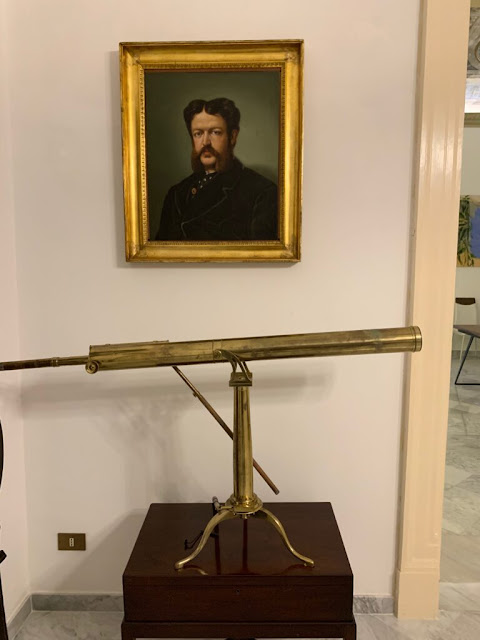
The book’s main character was modeled after the author’s great grandfather, who was an amateur star-gazer, as is the protagonist in the book.

In the book, the prince dotes on his nephew and “adopted” son, Tancredi, while in real life, the author, who had no heirs, really did adopt his distant cousin, Gioacchino (Giò) Lanza Tamasi, who was already part of a different Italian aristocratic family.

Sadly, as I was writing this blog post, I learned that Giò died last week in his Palermo home – Palazzo Lanza Tamasi on via Butera, the palace that was once home to Lampedusa after his original home on via Lampedusa was bombed during World War II.
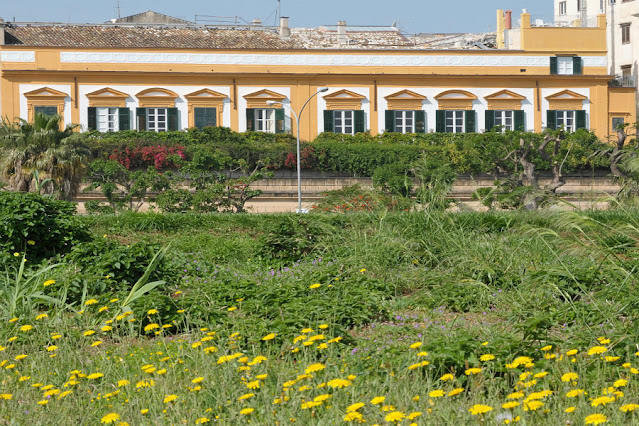
Palazzo Lanza Tamasi

A few weeks ago, I found myself sitting next to Giò during a luncheon in the 17th century palazzo, following a wonderful day of shopping and cooking with his wife Nicoletta, the duchess. Although duke and duchess, they were extremely down-to-earth and use their first names in introductions.
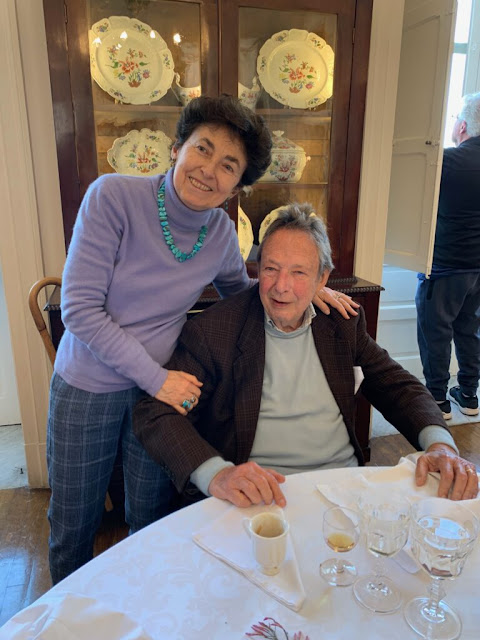
It almost seems trivial to write about our deliciously fun day of cooking last month after learning of Giò’s death this week, but the classes are vital in maintaining the palazzo, since upkeep on Palermo palaces doesn’t come cheap. There are a number of apartments in the palace that Nicoletta rents out to visitors also. If you’re planning a trip to Palermo, do yourself a favor and check out her website: Butera 28.
We began the day with a short trip to one of the city’s markets — Capo — to buy provisions for the lunch, then Nicoletta directed us in the preparation for the various courses. The menu was printed for everyone, headlined by the family crest:
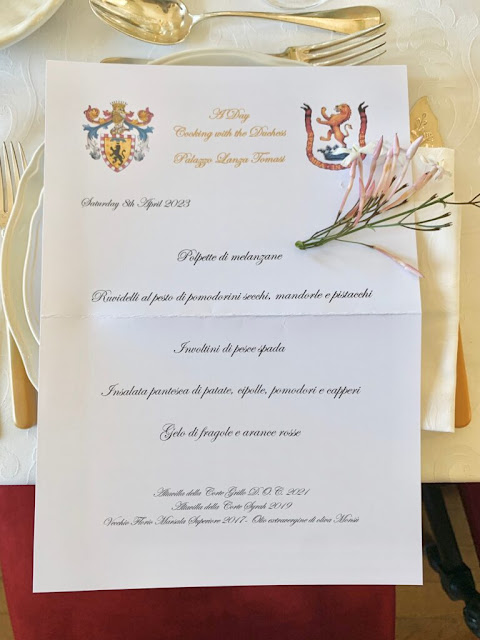
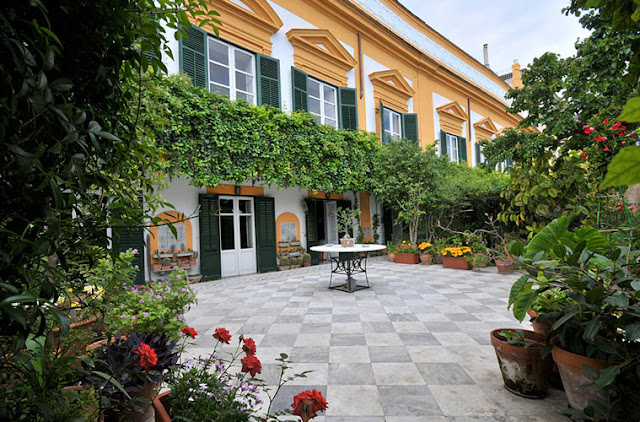
We strolled through their ample patio overlooking the sea, to harvest herbs and lemons for the meal:

We all took a hand in chopping, squeezing, peeling, stirring or whatever needed to be done — from the youngest —
to the oldest (my husband and I, without a doubt)
Through it all, the energetic Nicoletta directed us with humor but also the conviction of a drill sergeant — “No, that’s still not chopped finely enough….” or “You missed some of the flesh, keep scraping the eggplant….

She cooked right alongside us, with a knowledgeable and sure hand in whatever task was needed. The kitchen was equipped with a fabulous batterie du cuisine:
And plentiful local ingredients, including capers from Pantelleria, which were used in the recipe at the end of this post.
When our preparations were complete, we sat down to a multi-course lunch in a gorgeous dining room overlooking the sea.

During lunch, it was a privilege to sit next to Giò. He was an accomplished music critic, author, professor, director of several theater and opera companies during his lifetime, and one-time director of the Italian Cultural Center in New York, just to name a few of his numerous achievements. He was keeper of the flame for his adopted uncle’s literary heritage, and with his death, it also feels like the last living legend of “Il Gattopardo” has also gone.


Nicoletta gave us a tour of the palazzo after lunch, starting with the vast library:

There were several sitting rooms, including this one with yellow upholstered furniture, precious tapestries, art work, and Venetian chandeliers.
Another room in the palace:
With a photograph of Giò and Nicoletta earlier in their 40-year marriage:
In addition to paintings with historic, religious or mythical subjects, family ancestors were also captured for posterity:
Including a couple of sketches of family members by Picasso:

But for me, the highlight of the tour through the palace was seeing the original manuscript of “Il Gattopardo” written in Lampedusa’s own handwriting:

It’s sad to think he didn’t live long enough to see the success and popularity of his masterpiece.

Here is a photo of the author with more of his handwritten manuscript:

The members of the cooking class had come from the U.S., France and Germany and were a happy, easy-going group of travelers.
While there were several courses, I’m posting the recipe for just one here — a potato salad that would be perfect for that picnic you might be thinking about now that the weather has warmed. I came back from Sicily armed with the salted capers from Pantelleria that Nicoletta uses in this recipe. I also brought back sea salt from nearby Trapani, where salt has been harvested for decades. If you aren’t planning a trip to Sicily, you can buy both online from Gustiamo.com. The photo below is the dish we prepared that day, using the famed red onions from Tropea, impossible to find in the U.S. In the absence of those, supermarket red onions will stand in just fine.
We were too late to rent an apartment at Palazzo Lanza Tamasi. However, we rented a modern apartment in Lampedusa’s original palazzo that was bombed on Via Lampedusa, very centrally located in a quiet street.

The entrance includes a wall with writings from Lampedusa:

There are several apartments for rent. If you’re interested, send me an email and I will send you the rental info:

Check out Ciao Chow Linda on Instagram here to find out what’s cooking in my kitchen each day (and more).


Sicilian Potato Salad

Ingredients:

2 pounds (1kg) of potatoes

1 pound (1⁄2 kg) of tomatoes, optional

1⁄4 cup of salt preserved capers

1 tablespoon of dried oregano

1 medium red onion

Good red wine vinegar

Extra-virgin olive oil

Freshly ground pepper

Small new potatoes and Roma or San Marzano tomatoes would be ideal for this recipe. 

Directions:

Steam the potatoes until done, peel and cut them in large chunks.

Put them in a bowl, let them cool.

If using, cut also the tomatoes in bite-size pieces, seed them and add them to the potatoes.

Thoroughly but delicately rinse the capers and gently pat them dry.

Thinly sliced the onion in rings.

Add the capers and the onion rings to the bowl.

Sprinkle the oregano and the pepper.

In a little jug, mix the oil and the vinegar (1/3 of vinegar and 2/3 of oil).

Dress the salad with this mixture just before serving, otherwise the potatoes absorb all the oil and become soggy.

Serves 6-8.


Monday, April 8, 2019

Cassata Siciliana

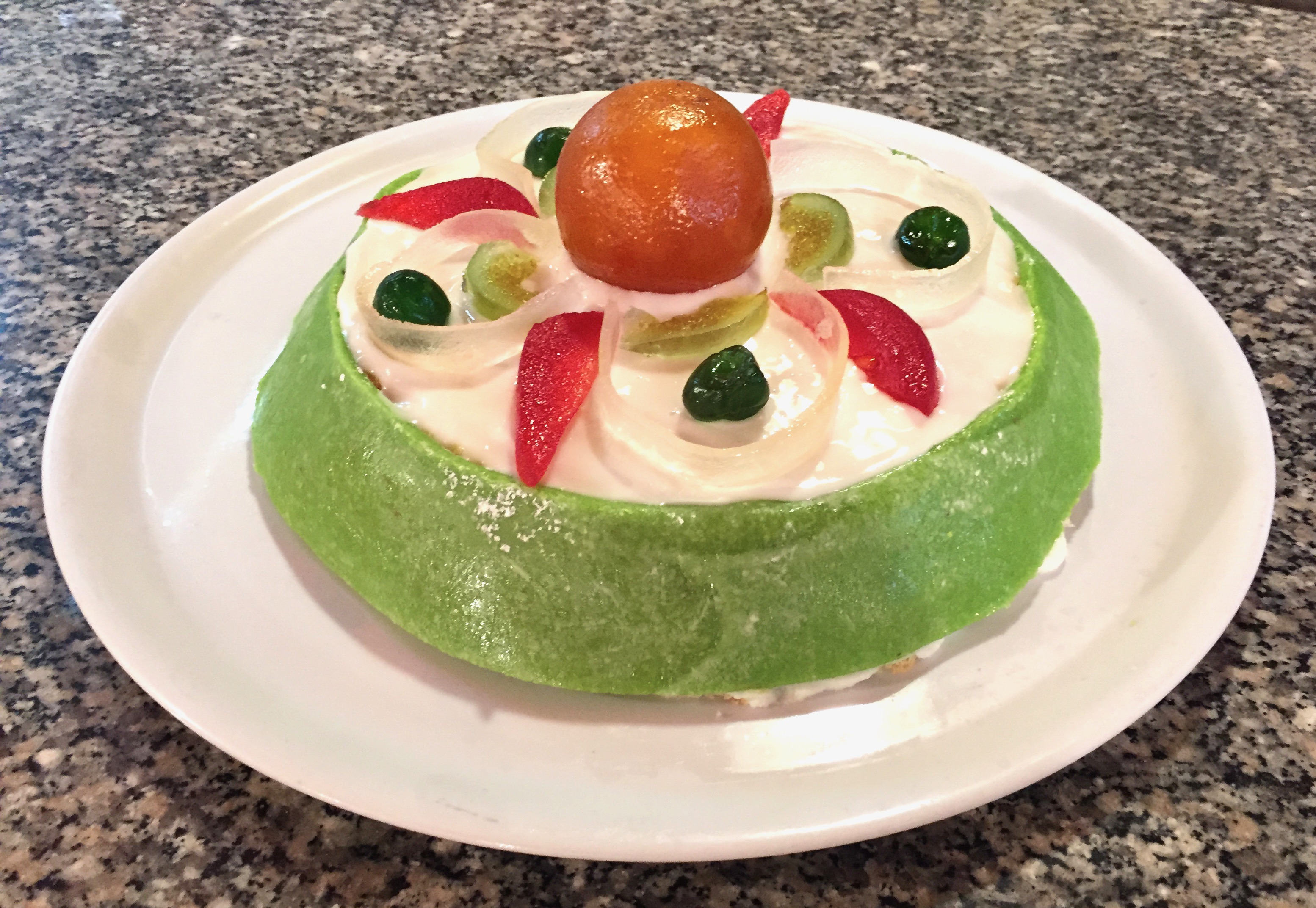
If you’ve ever been to Sicily, you know that one of the classic desserts from that island is cassata Siciliana, a  delicious sponge cake layered with a ricotta filling, traditionally edged with almond paste and topped with candied fruits.

I was fortunate enough to have Fabrizia Lanza show me how to make cassata when I stayed at her farm in Sicily last spring. Fabrizia, who lived and worked in Bologna in the field of art history, moved back to Sicily to take over the cooking school founded by her late mother, Anna Tasca Lanza. The school offers lots of different programs from food writing to sketching, and even a ten week intensive course called “Cook The Farm.” Click here for more information.

Cassata Siciliana may look complicated to make, but Fabrizia breezed through the various steps in short order without working up a sweat. With Easter just around the corner, this would make a mouth-watering, show-stopper dessert.

The first step is making the marzipan, using pistachios, almond flour, and a few other ingredients, including the traditional green food coloring. Make the marzipan without the food coloring if you prefer, or if you don’t want to use the marzipan at all, you can omit it, and just cover the entire cassata with the confectioner’s sugar icing.

Roll out the marzipan and place strips of it in a tin specially made for cassata. These pans are not easy to find, but a pie plate makes a good substitute. Line it in plastic wrap first to make it easier to flip.

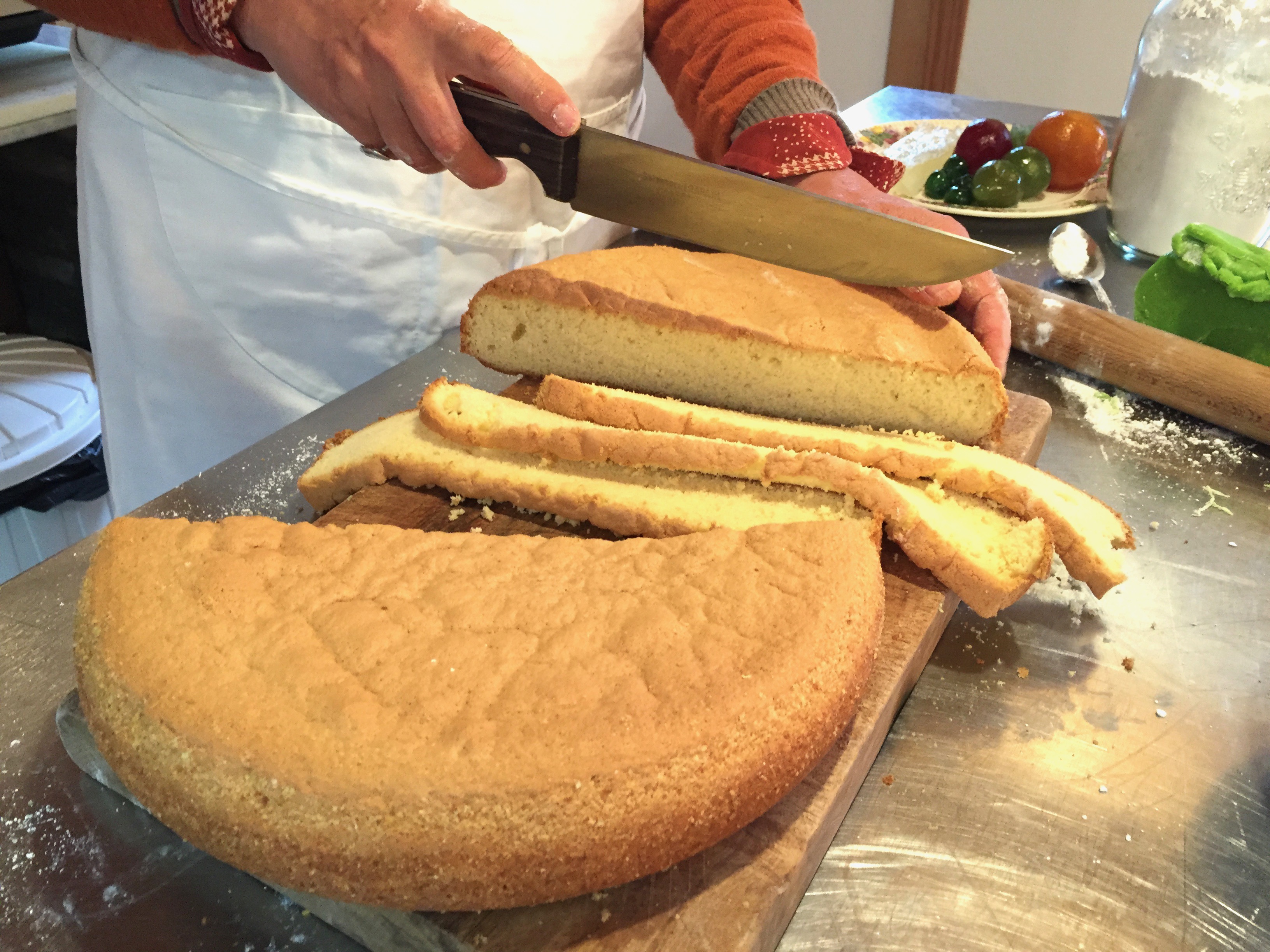
The sponge cake (pan di Spagna) is sliced in this manner, contrary to how I presumed it would be sliced (through the middle in horizontal layers).

Place one layer of the slices on the bottom of the pan and sprinkle with limoncello, or Grand Marnier liqueur.Spread a layer of the ricotta/sugar mixture on top.Then repeat with another layer of the sponge cake and liqueur. Pat it down firmly.Then place a serving plate over it all and flip it over (fingers crossed).

Remove the pan and the plastic wrap.

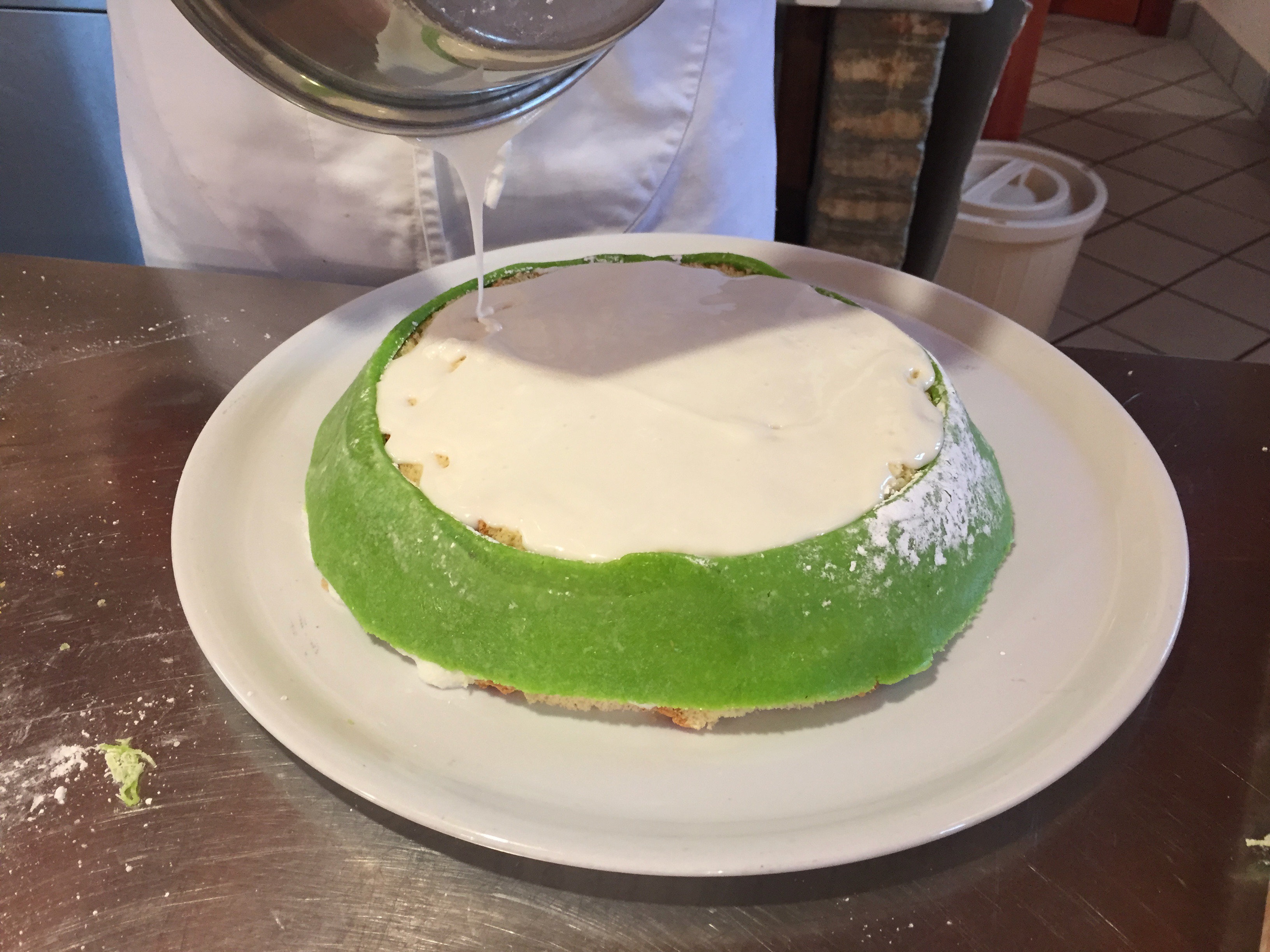
Drizzle the confectioner’s sugar glaze on top.

Then decorate with candied fruits. They’re quite common in Sicily, and infinitely better in quality than what we get here in the states. If you can’t get good candied fruits, just keep it simple and use some homemade candied orange peel, (recipe here) rather than ruin your cassata with “industrial” candied fruit. Besides, the larger pieces, like the whole candied orange, are mostly decorative anyhow.

Just looking at the interior of this cassata Siciliana brings back some delicious memories and a strong desire to return to that fascinating island.

Part of the reason this cassata was outstanding was the quality of the ricotta that went into it. Fabrizia used sheep’s milk ricotta, but if you can’t find it, (admittedly not easy), use cow’s milk ricotta, well-drained. Our ricotta couldn’t have been any fresher, since we went to the farm that morning, where the cheesemaker made the cheese right before our eyes.

We could thank these sheep for the ricotta, who just a short while earlier had been milked.
Much of the pecorino cheese is drained in plastic molds, but here are some that were being drained in traditional reed baskets. Thank goodness for people still making food in the time-honored traditions of their ancestors, and for people like Fabrizia Lanza, who is helping disseminate these old world customs and recipes. If you really want to slow down and treat yourself to a unique experience, book at week at her farm, Case Vecchie and immerse yourself in the sights, sounds, smells and tastes of authentic Sicily.
Click here to connect with me on Instagram and find out what’s cooking in Ciao Chow Linda’s kitchen each day (and more)

Cassata Siciliana
Author: Fabrizia Lanza
Ingredients
  • FOR THE SPONGE CAKE:
  • 6 eggs, at room temperature
  • 1 1/4 cups (150 grams) sugar
  • 1 teaspoon orange or lemon zest
  • 1 1/4 cup (150 grams) flour, sifted
  • 3 tablespoons limoncello or Grand Marnier
  • FOR THE MARZIPAN:
  • 2 3/4 cup (350 grams) almond flour
  • 1 1/4 cup (150 grams) pistachios, ground
  • 1 1/2 cup (200 grams) powdered sugar
  • 1 teaspoon glucose
  • green food coloring
  • candied fruit, for garnish
  • FOR THE ICING:
  • 3 cups (370 grams) powdered sugar
  • juice of 1 lemon, strained
  • FOR THE RICOTTA CREAM:
  • 2 lb. (1 kilo) ricotta
  • 1 1/2 cups (200 grams) sugar
Instructions
  1. FOR THE SPONGE CAKE:
  2. preheat the oven to 350 degrees F.
  3. Butter and flour a 9 inch springform pan.
  4. Put the eggs into the bowl of a mixer and beat for 10 minutes.
  5. Add the sugar and lemon zest and continue to beat until the mixture forms a ribbon when poured, about 15 minutes.
  6. In two or three parts, gently fold in the sifted flour.
  7. Pour into the springform pan and bake for 25-30 minutes, or until a needed inserted into the center of the cake comes out clean.
  8. Cool on a cake rack and set it aside.
  9. TO MAKE THE MARZIPAN:
  10. Mix the almond flour, ground pistachios and sugar.
  11. Make a well and add a teaspoon of glucose, 2 tablespoons of water and a few drops of food coloring.
  12. Combine ingredients like a dough, then roll out on a workspace dusted with powdered sugar
  13. Cut long strips lengthwise into 1/2 inch thick slices.
  14. Roll out three of the slices into strips about 1/8 to 1/4 inch thick.
  15. Knead the remaining marzipan into a ball, wrap it in plastic, and store in the refrigerator for later use.
  16. Line a 9-inch cassata pan, or a 9-inch pie pan with sloping sides, with plastic wrap.
  17. Wrap the marzipan strips along the inside edge of the pan, slightly overlapping the ends.
  18. Press against the pan to form a smooth layer.
  19. Cut the cake from top to bottom into 1/2 inch thick slices and trim off the crust
  20. Put a layer of slices on the bottom of the pan, drizzle the layers of the sponge cake with limoncello or Grand Marnier.
  21. In a bowl, mix the ricotta with sugar using a spatula until evenly distributed.
  22. Spread the layer of sponge cake evenly with the ricotta cream.
  23. Carefully place another layer of cake slices on top, drizzle again with limoncello or Grand Marnier.
  24. Flip the cake on a large serving plate.
  25. Carefully lift off the pan and peel off the remaining plastic wrap
  26. Set the cassata aside while you are making the icing.
  27. Sift half of the powdered sugar into a bowl.
  28. Add half of the lemon juice.
  29. Stir the liquid into the sugar, breaking up any lumps.
  30. Sift the remaining sugar into the bowl and add the rest of the lemon juice, until it has a thin spreading consistency and forms a smooth, shiny icing.
  31. Ice the top of the cassata, leaving the marzipan sides of the cake visible
  32. If you are not using green marzipan, ice the entire cake.
  33. Decorate with whole and cut candied fruit.
  34. Refrigerate and allow to set for at least 1 to 2 hours before serving.


SaveSave